
Food-safe, every visit
Office Kitchen and Breakroom Cleaning
Office kitchen cleaning for Melbourne workplaces: benches, sinks, appliances, tables and bins cleaned with food-safe products on every visit, fridges cleared on a set day, and dishwasher tablets, soap and paper towel restocked. It is the most heavily used room in most offices, and it gets its own section in our full office cleaning scope.
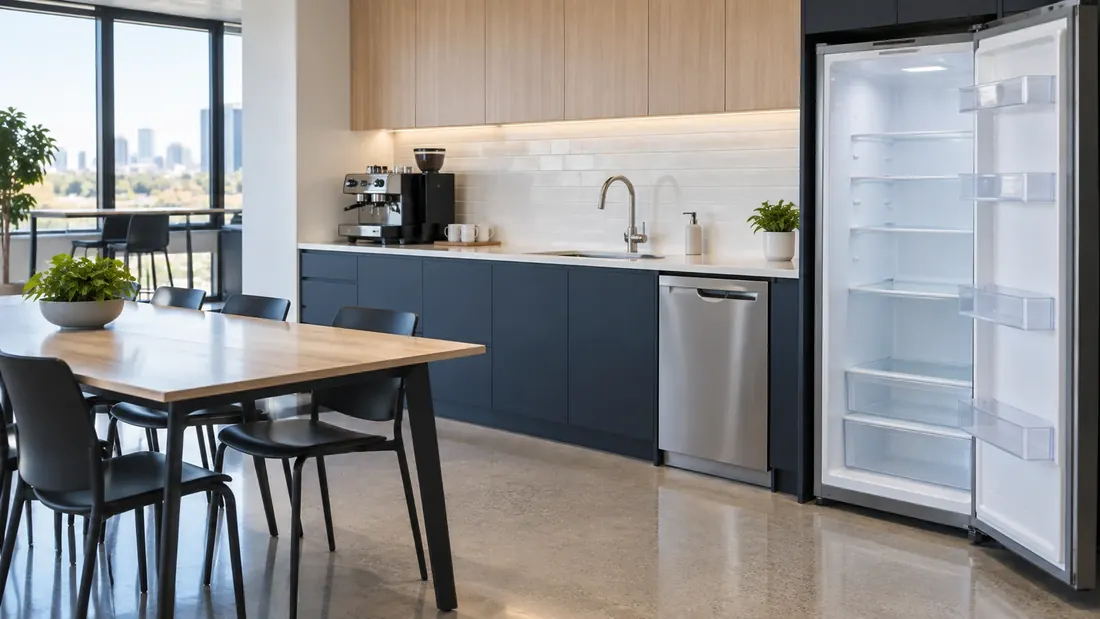
Kitchen standards we keep
- Clean first, then sanitise
- Green cloths for kitchens only
- Food-safe products
- Stock counted each visit
- $20M insuredCertificate supplied
- Fridge daysAgreed with staff
- Food-safe productsSafety sheets on site
- Part of your visitOr a deep clean add-on
A shared kitchen does more work per square metre than any other room in the office. Twenty or thirty people make coffee, heat lunch and leave a mug by the sink, often within the same two hours. Food spills, milk drips and crumbs attract pests faster than anything else in a building, and a smelly fridge is the single most common complaint office managers bring to their cleaners.
What does office kitchen cleaning cover, zone by zone?
Office kitchen cleaning covers eight zones: sink and drying area, benches, small appliances, the fridge, the dishwasher, tables and seating, bins, and floors. The daily ones are handled on every visit; the fridge and appliance insides are on a weekly or monthly rhythm so they never get out of hand.
Sink scrubbed, taps and plug descaled, drying rack emptied and wiped, drain cleared of scraps.
Every visitCleared, cleaned with detergent, then sanitised and left to air dry where possible.
Every visitKettle, toaster and coffee machine outsides daily; microwave inside and drip trays weekly.
Daily and weeklyHandles and seals weekly, a full clear-out and wash monthly or on a day you choose.
Weekly and monthlyLoaded and started, or unpacked, as agreed; filter and door seal cleaned monthly.
Every visitTops and chair seats wiped, crumbs cleared, chair legs and table bases weekly.
Every visitFood waste, recycling and soft plastics separated and removed; bins washed weekly.
Every visitMopped last, with extra attention under tables and in front of the sink and bins.
Every visitCrumbs under the toaster, sugar spilled beside the coffee machine and a bin left overnight are exactly what draws ants and cockroaches into an office. A kitchen cleaned properly every day is the cheapest pest control you can buy. If we see droppings, trails or chewed packaging, it goes on the visit report the same night so you can call your pest contractor early.
Method
Why is office kitchen cleaning a two-step job?
Office kitchen cleaning is a two-step job because cleaning and sanitising do different things. Cleaning removes grease, food and dirt; sanitising kills the germs left behind. Sanitiser sprayed onto a greasy bench barely works, so food surfaces are always cleaned first and sanitised second.
Clean
Scrape or wipe away scraps, then wash with warm water and detergent to lift grease and residue.
- Food-safe neutral detergent
- Green microfibre, kitchen only
- Rinse where detergent could linger
Sanitise
Apply a food-safe sanitiser to benches, handles and tables and leave it for the time its label states.
- Food-contact approved product
- Label contact time respected
- Air dry where practical
This is the order Food Standards Australia New Zealand sets out for cleaning and sanitising: clean items before you sanitise them, and use a commercial sanitiser according to its instructions or a dishwasher on its sanitising cycle. An office kitchen is not a food business, but the same logic keeps staff from getting sick.
Only green cloths touch kitchen surfaces. Cloths from toilets and bathrooms, which are red and yellow, never enter the kitchen, and mops for kitchen floors are kept separate from bathroom mops. Every product we use near food carries a safety data sheet kept on site.
The fridge
How do you handle the office fridge?
We handle the office fridge with an agreed routine that staff know in advance: a reminder note, a clear-out of anything unlabelled or past its date on a set day, and a full wash of shelves and seals. It is the most sensitive job in the kitchen, because it involves other people's food.
- Reminder on the door
A plain note tells staff which day the fridge will be cleared and asks them to label anything they want kept.
- Sort and remove
Unlabelled, open or out-of-date food goes; sealed items and anything labelled for the week stay.
- Wash and sanitise
Shelves and drawers washed, seals cleaned of mould, surfaces sanitised, spills underneath wiped.
- Report it
A line on your visit report notes what was removed and anything wrong, like a warm fridge.
A fridge running warm is worth flagging. Victoria's Better Health Channel advises keeping high-risk food at 5 °C or below, and an overloaded office fridge often sits well above that. If the fridge feels warm or the door seal has failed, we note it so your facilities team can have it checked before someone's lunch becomes a sick day.
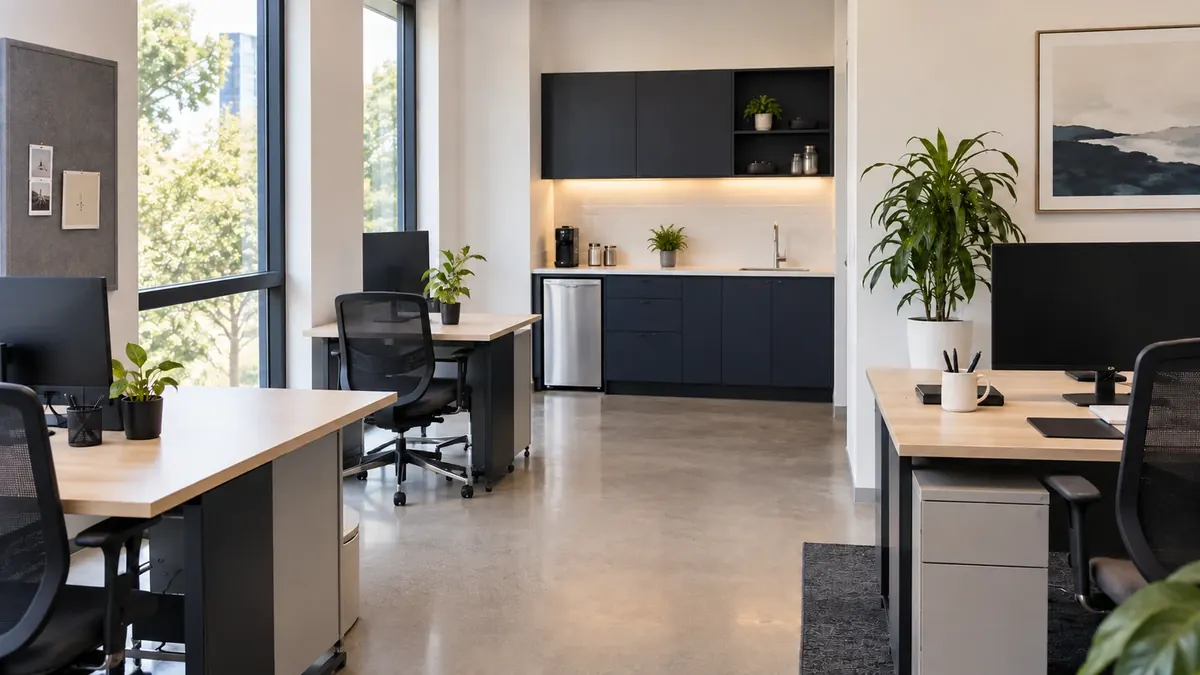
Coffee machines and hot water
Do you clean the coffee machine and boiling water unit?
We clean the outside of coffee machines, boiling water units and fridges every visit, and the parts a user is meant to empty, such as drip trays and grounds bins, weekly or more often. Internal descaling, filter changes and servicing belong to the supplier's technician, because opening those units can void a service contract.
Bean-to-cup machines are the messiest item in most office kitchens. Milk splashes on the steam wand, grounds spill around the hopper and the drip tray overflows by Thursday. We wipe the wand tip and the surround, empty the grounds bin and drip tray, and run the machine's own rinse cycle if the model has one and you are happy for us to use it.
Wall-mounted boiling water units get the tap, the drip tray and the wall behind them cleaned, since scale and tea stains build up there. If a unit starts leaking, spitting or showing a filter warning, we note it on the visit report so whoever services it can be booked.
- Outside surfaces every visit
- Drip trays and grounds bins emptied
- Steam wand tip wiped
- Faults and warnings reported
How often and restocking
How often should an office kitchen be cleaned?
An office kitchen should be cleaned every day it is used, because food residue and damp cloths grow bacteria within hours. Large teams sometimes book a quick midday reset once the lunch rush is over. Fridges need clearing at least monthly, and appliance insides weekly.
| Consumable | What we do | Who buys it |
|---|---|---|
| Dishwashing tablets and detergent | Restock and note when low | You, or supplied by us at a set price |
| Hand soap and paper towel | Refill dispensers every visit | You, or supplied by us |
| Bin liners | Replace every visit | Supplied by us |
| Tea towels and sponges | Swap out used ones for washing | You; we never reuse staff sponges on benches |
| Coffee, milk and tea | Note when running low | You |
Kitchens that have been let go, with baked-on grease behind the microwave, a stained grout line and a rangehood filter nobody has touched, benefit from a one-off reset before regular cleaning takes over. That fits naturally into an office deep clean, when appliances are cleaned inside and out and the fridge is pulled forward to reach the floor behind it.
Quote
How can I add kitchen cleaning to my office?
Kitchen cleaning comes with every regular office program, so the simplest route is a quote for your whole office. Tell us the suburb, headcount and how busy the kitchen gets. If you only need a kitchen reset or a midday service, say so and we will price that on its own.
- Describe the kitchen. Headcount, appliances, dishwasher and how many kitchens.
- Set the rules. Dishwasher routine, fridge day and who buys consumables.
- Start the routine. Kitchen done on every visit, stock noted on each report.

Questions
What do people ask about kitchen cleaning?
Two questions come up in almost every walk-through of an office kitchen.