
GP, dental and specialist rooms
Medical and Dental Office Cleaning
Medical office cleaning services for Melbourne GP clinics, dental practices and specialist rooms: clean-to-dirty routes, colour-coded equipment, TGA-listed disinfectants where your policy calls for them, and dated records that support the evidence your practice keeps for accreditation. It is the most specialised part of our office cleaning across Melbourne.
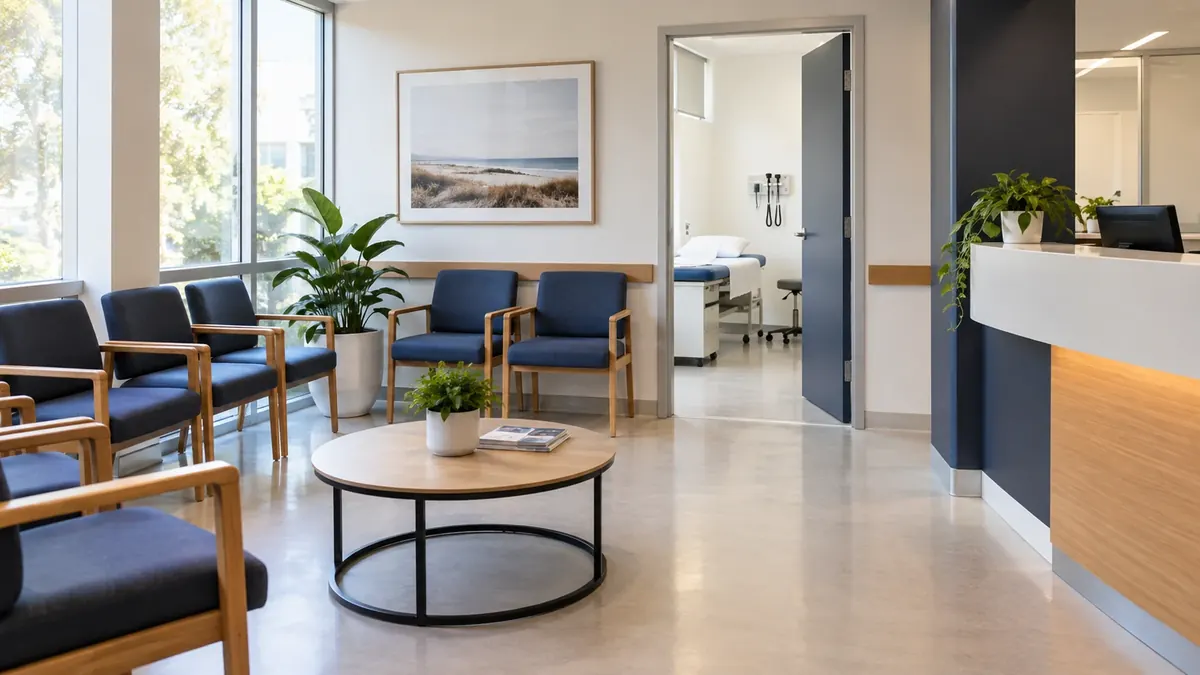
Built for clinical settings
- Clean-to-dirty order every visit
- Colour-coded cloths and mops
- TGA-listed disinfectants
- Dated cleaning records
- $20M insuredCertificate for your practice file
- Police-checkedConfidentiality briefed
- Records keptDated, per area
- No lock-inMonth to month
A medical practice is an office with a second job. The reception, kitchen and admin desks need the same care as any workplace, but the consult and treatment rooms need a different method, a different order and a paper trail. Getting that wrong is not just untidy: it undermines the infection control work your nurses and doctors do all day.
We are clear about where our role starts and stops. Cleaners look after the environment: floors, surfaces, bathrooms, bins and touch points. Your clinical team looks after instruments, clinical equipment and anything between patients. The rest of this page explains how the two fit together, and what records you get from us.
Which practices use our medical office cleaning services?
Our medical office cleaning services are used by general practices, dental surgeries, allied health and specialist consulting rooms across Melbourne. They share waiting rooms, consult rooms, patient bathrooms and staff areas, and they all need a cleaner who follows the practice's infection control policy rather than a generic office routine.
Several consult rooms, a treatment room, busy waiting areas and patient bathrooms used all day.
Surgery floors and non-clinical surfaces after hours, with instrument and chair care left to your team.
Physio, podiatry and psychology rooms with treatment tables, gyms and shared waiting areas.
Consulting suites in medical centres, often with shared reception and building rules to follow.
Clinical areas
How are consult and treatment rooms cleaned?
Consult and treatment rooms follow a clean-to-dirty sequence, moving from the lowest-risk areas to the highest, with fresh colour-coded cloths for each zone. Surfaces are cleaned with detergent first and then disinfected where the practice's policy requires it, and bathrooms and waste points always come last.
- Low riskStaff areas and admin
Offices, staff room and kitchen, where nothing clinical happens.
- Low riskReception and waiting
Counter, seating arms, door handles, children's area and floors.
- Medium riskConsult rooms
Desks, couch frames, sinks, bins and every handle and switch.
- Medium riskTreatment room
Benches cleared by staff first, then surfaces, sinks and floors.
- Higher riskPatient bathrooms
Toilets, basins, rails and floors with their own cloths and mop.
- LastWaste and equipment
General waste out, cloths bagged, mop heads changed.
The order matters because cleaning moves germs as well as removing them. A cloth used on a toilet rail and then a reception counter spreads exactly what the practice is trying to contain. So every zone gets a separate colour of cloth and mop head, and nothing travels backwards along the route. Mop heads and microfibre are laundered hot between visits, never rinsed and reused.
The route is written for your floor plan during the walk-through and approved by your practice manager or infection control lead. The RACGP infection prevention and control guidelines give practices a whole section on cleaning, including scheduled cleaning, methods, spills and monitoring; our scope follows whichever of those steps your policy adopts.
Area by area
What is cleaned in each part of a practice?
Each part of a practice has its own risk level, frequency and method. The table shows the standard plan for a general practice; dental and allied health versions change the treatment areas but keep the same structure. Your written scope lists every room by name.
| Area | Risk | How often | What is done |
|---|---|---|---|
| Reception and waiting | Low | Every visit | Counter, seat arms, pens, door handles, toys, glass and floors |
| Consult rooms | Medium | Every visit | Desk, couch frame and base, hand basin, taps, switches, bins, floors |
| Treatment room | Medium | Every visit | Surfaces cleared by staff, then cleaned and disinfected, sinks and floors |
| Patient bathrooms | Higher | Every visit, plus day checks on request | Toilet, rails, basin, taps, dispensers, floors, restock |
| Staff kitchen | Low | Every visit | Benches, sink, appliance fronts, fridge handles, floors |
| Store and utility rooms | Medium | Weekly | Floors and shelving fronts only, where the practice allows access |
The environment
- Floors, walls and fixed surfaces
- Bathrooms, sinks and dispensers
- Touch points in every room
- General waste and recycling
- Cleaning records for each visit
Clinical equipment and care
- Instruments and sterilisation
- Examination couches between patients
- Clinical equipment and dental chairs
- Sharps and clinical waste handling
- The infection control policy itself
Clinical waste and sharps stay with your practice and its licensed waste contractor; our cleaners do not handle them. Blood or body fluid spills found after hours are dealt with using your practice's spill kit and procedure, then recorded so your team can see what happened. The office side of the scope follows what's included in office cleaning.
Dental practices
What changes when the practice is a dental surgery?
In a dental surgery the clinical team owns everything within reach of the chair: the chair itself, the delivery unit, lights, suction and the sterilisation room. Our cleaners take the surgery floor, walls, bins, hand basins where your policy allows, and every non-clinical space around the surgeries.
Each night
- Surgery floors mopped with a surgery-only mop
- Door handles, switches and cabinet fronts
- Hand basins and taps, if on the scope
- Waiting room, reception and toilets
- Staff room, kitchen and offices
- General waste out, liners replaced
Every patient and every session
- Dental chair and delivery unit
- Operating light and suction lines
- Benches inside the treatment zone
- Sterilisation room and reprocessing
- Amalgam, sharps and clinical waste
- Water line management
Dental floors see fine spatter and aerosol settle through the day, so surgery floors get their own mop and bucket, used nowhere else and laundered after every night. If your practice wants the sterilisation room floor included, we agree the exact limits in writing with your nurse or practice manager first, because that room has its own clean and dirty flow that cleaners must not cross.
Changing cleaners in the middle of an accreditation cycle worries many practice managers. It need not. We start by copying the format of your existing cleaning records where they work, so the file shows one continuous history, and we note the changeover date and the new scope in the first record so a surveyor can see exactly what changed.
Products and records
What products and records support your accreditation?
We use neutral detergent for routine cleaning and a TGA-listed disinfectant wherever your policy asks for disinfection, with a safety data sheet for each. After every visit you get a dated record of what was cleaned, where and with what. Those records support your practice's accreditation evidence; they do not replace it.
| Area | Task | Product | Time | Initials |
|---|---|---|---|---|
| Consult 1 to 4 | Surfaces, sinks, floors | Detergent, then disinfectant | 7:10 pm | A.P. |
| Treatment room | Benches and sink | Disinfectant | 7:40 pm | A.P. |
| Patient bathrooms | Full clean, restock | Disinfectant | 8:05 pm | R.M. |
| Waiting room | Touch points, floors | Detergent | 8:20 pm | R.M. |
| Spills | None found | - | 8:30 pm | R.M. |
Initials and times are illustrative. Real records carry your cleaners' initials and product names.
The RACGP's Standards for general practices, now in a 6th edition, sit behind most GP accreditation visits. What a surveyor usually wants to see about cleaning is simple: a schedule, evidence it was followed, and a way to act when it was not. Our records give you the second part in a form you can file.
Dental practices work a little differently. The Dental Board of Australia no longer prescribes one set of infection control guidelines, and instead expects each practice to follow evidence-based guidance of its choosing. We clean to whatever your practice has adopted, and record it the same way.
We do not claim to make a practice compliant or to meet any standard on your behalf. Accreditation belongs to the practice. What we can promise is consistent cleaning to your written method, the right products, and records you can hand a surveyor without editing.

Timing and cost
When do you clean a practice, and how is it priced?
Most practices are cleaned every night they open, after the last patient leaves, with Saturday clinics cleaned that afternoon or evening. Pricing is per visit, set after a walk-through, and depends on the number of consult rooms, bathrooms and treatment spaces rather than floor area alone.
Night cleans keep cleaners out of patient areas during consulting hours and let them work through rooms in the correct order without interruption. If your practice runs extended hours, we start with the areas that close first. For busy clinics we can add a short midday bathroom and waiting room check, which is often where complaints start.
Confidentiality is part of the brief. Cleaners do not open files, read screens or move papers on desks, and they work only in the rooms the scope names. Every cleaner is police-checked before starting, and the same small team stays with your practice so your staff know who has been in the building.
- Nightly on consulting days
- Saturday clinics covered
- Optional midday check
- Same small team each night
For the full list of office services that sit around the clinical scope, see our office cleaning services.
Quote
How does a practice get a cleaning quote?
Tell us your suburb, consulting days, number of consult and treatment rooms, and who owns your infection control policy. We reply within two business hours to arrange a walk-through with your practice manager, then send a written scope, cleaning route and per-visit price for approval.
- Share your policy. The cleaning section of your infection control policy, if you have one written.
- Walk the practice. Rooms, risk zones, products and anything off limits.
- Approve the route. Scope, colour codes, record format and nights, signed by the practice.
Questions
What do practice managers ask first?
Answers to the questions we hear from GP, dental and allied health practice managers before they sign. If your question is about a specific standard, send us the relevant section of your policy and we will say exactly how our scope meets it.